
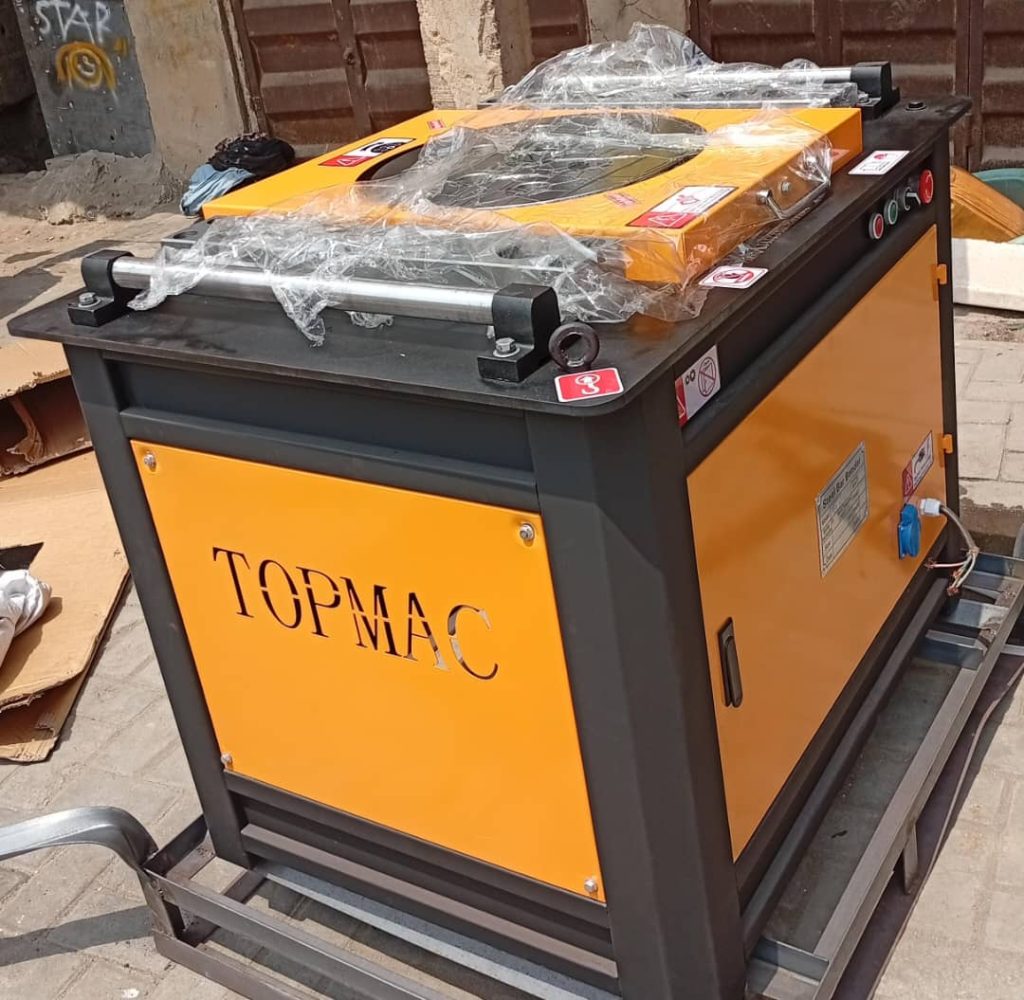
A bending machine is a specialized mechanical or hydraulic tool used in metal fabrication and civil engineering. Its job is simple: bend materials like reinforcement steel bars (rebar), pipes, sheet metal, and structural profiles to precise angles and radii without weakening the metal.
Across commercial and infrastructure sites in Nigeria, accurate steel bending is non-negotiable. Whether you are working on cast-in-place concrete columns, drainage culverts, structural steel frames, or industrial pipe networks, you need clean bends every single time. Leadhaul Investment Limited supplies dependable, site-ready bending equipment built to handle tough local conditions while keeping your dimensions exact.
Common Types of Bending Machines on the Job Site
| Machine Type | Primary Applications | Workpiece Material | Core Advantage |
| Rebar Bending Machine | Beams, columns, foundation footings, stirrups | High-tensile steel rebars (6mm to 40mm+) | Cuts out operator fatigue and shapes consistent angles in seconds |
| Pipe and Tube Bending Machine | Scaffolding, plumbing lines, handrails, industrial piping | Hollow steel pipes, copper, aluminum | Bends hollow pipes without flattening or crimping the walls |
| Sheet Metal Press Brake | Roofing sheets, steel enclosures, ducting, custom profiles | Carbon steel, galvanized sheet metal | Uses high hydraulic force to deliver straight, uniform bends over long sheets |
Why Motorized Bending Machines Beat Manual Site Labor
Relying on manual pipe benders or hand-lever bending keys slows down your timeline. It also leads to uneven angles across your reinforcement cages, which creates headaches during structural inspections. Switching to powered bending equipment solves these everyday site challenges:
-
Consistent Angles Every Time: Adjustable stops allow your operators to turn out identical 45, 90, 135, or 180 degree hook bends. That consistency makes passing engineering inspections straightforward.
-
Far Less Steel Waste: When workers bend steel past the target angle by hand and try to hammer it straight, high-yield rebar often develops micro-fractures. Motorized benders apply steady hydraulic or electric torque, protecting the structural integrity of the steel.
-
Much Faster Turnaround: A motorized rebar bender easily shapes hundreds of stirrup ties or anchor hooks in an hour. That frees up your crew to focus on tying cages and prepping for concrete pours.
-
Safer Working Conditions: Pulling manual bending levers on muddy or uneven ground causes slips, back strains, and hand injuries. Push-button and foot-pedal machines make steel bending significantly safer.
Practical Factors to Check Before Buying
Before you commit to a bending machine for your yard or site, run through this quick checklist:
-
Maximum Bending Capacity: Check your bar schedule. Make sure the model you pick comfortably handles your thickest stock, whether that means 25mm, 32mm, or 42mm rebar.
-
Power Setup: If your site runs off generator power, make sure the machine runs cleanly on standard 3-phase generators (380V/415V) and can handle minor voltage swings without tripping motors.
-
Control Style: Foot pedals keep an operator’s hands free to support long bars, while semi-automatic digital presets are ideal if you need to run high volumes of standard stirrups.
-
Site Mobility vs. Workshop Base: Decide if you want a compact unit on wheels to roll across different floor slabs, or a heavy stationary unit bolted down in a central fabrication yard.
Sourcing Construction Equipment with Leadhaul Investment Limited
Buying heavy machinery in Nigeria comes down to two things: solid build quality and accessible after-sales support. Located along the Lagos to Abeokuta Expressway, Leadhaul Investment Limited equips contractors, developers, and project managers across the country with dependable construction machinery, earth-moving gear, and site equipment.
-
Office Address: Plot 669, Lagos to Abeokuta Expressway, beside Keystone Bank, Ijaye Ojokoro, Lagos, Nigeria
-
Phone Lines: +234 806 011 3266 / +234 704 158 1968
-
Official Website: leadhaul.com
Frequently Asked Questions
What bar sizes can a standard rebar bending machine process?
Most standard site benders handle carbon and deformed steel bars from 6mm up to 32mm. Larger civil engineering models can bend bars up to 40mm or 50mm without strain.
Can I bend both pipes and solid rebar on the same machine?
No, they use different bending principles. Rebar machines wrap solid steel bars around a central pin or roller. Pipe benders require specialized formers and internal mandrels to stop hollow tube walls from crushing inward while bending.
How do you maintain an electric bar bender on a dusty Nigerian site?
Check your gear oil levels regularly, blow out metal scale and grit at the end of every shift, grease the main pivot pins, and connect through a stable generator or breaker to keep the motor safe from voltage spikes.